A Human Gets Your Product Instantly. Why Doesn't the Machine?
A person understands a playful product title instantly. A machine often can't. Here is why catalogs built for display are hard for AI to read.
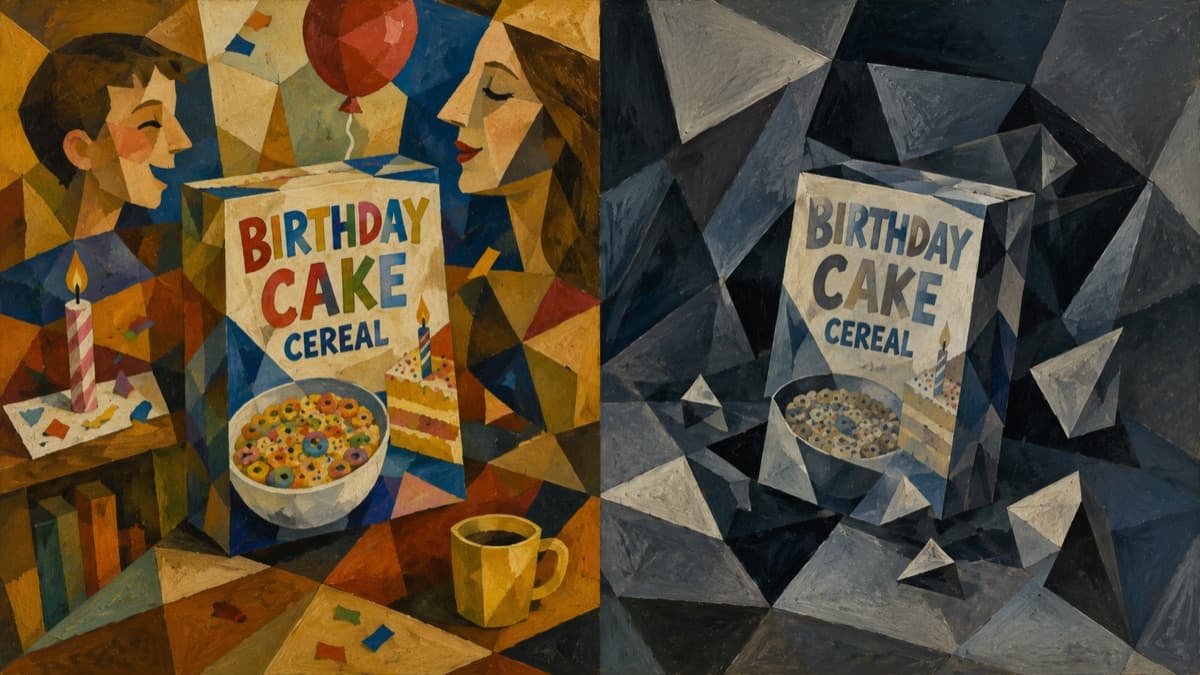
Picture a product on a shelf called "Birthday Cake Cereal."
A person reads that and understands it in half a second. It's a sweet breakfast cereal, flavored like birthday cake, aimed at kids or anyone who wants a treat in the morning. Nobody has to explain it. The name is playful, the photo does the rest, and the shopper simply gets it.
Now hand that exact same title to a machine, with no other structured information, and ask it what the product is, who it's for, and when to recommend it. Suddenly it's much less obvious. Is "cake" a clue that this is a dessert? Is it a baking mix? A candle? A snack? The very thing that makes the name delightful to a human — that it leans on shared context — is what makes it hard for a machine.
This is the quiet mismatch at the center of AI-ready commerce.
The human brings the meaning with them
When a person understands your product instantly, it's tempting to credit your catalog. Usually the credit belongs to the reader.
People arrive carrying enormous context: culture, brand familiarity, the category they're browsing, the photo in front of them, the price, the shelf it sits on. The title doesn't have to contain the meaning — it only has to trigger meaning the person already has. A good product title is a spark, not a definition.
That's excellent writing for a human. It's a problem for a machine, because the machine has none of that context to bring. It can't see the shelf, doesn't share the culture, and won't infer the joke. It has exactly what you expressed as data, and nothing more.
Catalogs are written to be seen, not understood
For twenty years, the job of a product listing was to catch a human eye and win a click. So catalogs were tuned for display: names that intrigue, copy that sells a feeling, images that carry the weight. Meaning was allowed to live between the lines, because the reader always filled it in.
The machine reader can't work between the lines. It works with what's on them. And when the actual meaning of a product — what it is, who it serves, the situations it fits, why someone would pick it — never got written down as structured information, the machine is left holding a clever title and not much else.
The uncomfortable twist: the more distinctively human your catalog copy is — brand names, wordplay, lifestyle language, inside references — the more meaning it may be assuming the reader already has. Wonderful for people. Opaque for a machine.
(You might be thinking: "but I already cleaned up my product feed." That's a different thing entirely, and it's the next question: You Cleaned Your Feed. Why Is AI Still Confused?)
The fix is not dumber copy
Here's what this is not an argument for: stripping the personality out of your catalog and naming everything like a spreadsheet. Your human-facing copy is doing its job. You shouldn't trade the shopper's delight for a machine's convenience.
The answer is to keep the catalog humans love and add, underneath it, the machine-readable meaning the third reader needs — so "Birthday Cake Cereal" can still charm a person while a machine can also resolve that it's a sweet breakfast cereal for a certain shopper and moment. That underneath layer is the Semantic Commerce Layer™: it doesn't replace your catalog or flatten your voice; it makes what you've already written interpretable to machines.
A product built to be seen served you well for two decades. Now it also has to be built to be understood. The good news is you don't have to choose.
Find out where your catalog stands
→ Run the free Agentic Catalog Readiness Audit™ — see which of your products a machine can actually resolve, and which it can't.
→ Read the complete Research Paper — The Semantic Commerce Layer™, the full framework behind this series.
Continue the series
← Previous: Who Is Actually Reading Your Catalog Now? · ⌂ The Semantic Commerce Layer™ (Research Paper) · → Next: You Cleaned Your Feed. Why Is AI Still Confused?
Series: The Semantic Commerce Layer™ (F-RP001) · Knowledge Domain: Foundation
NSOLVIA Intelligence — Products generate knowledge. Knowledge generates authority.