Nobody Knows My Products Like I Do. Does That Still Count for Anything?
The owner's knowledge is the most valuable data in the store — and machines can't read minds. How verified confirmation turns expertise into structure.
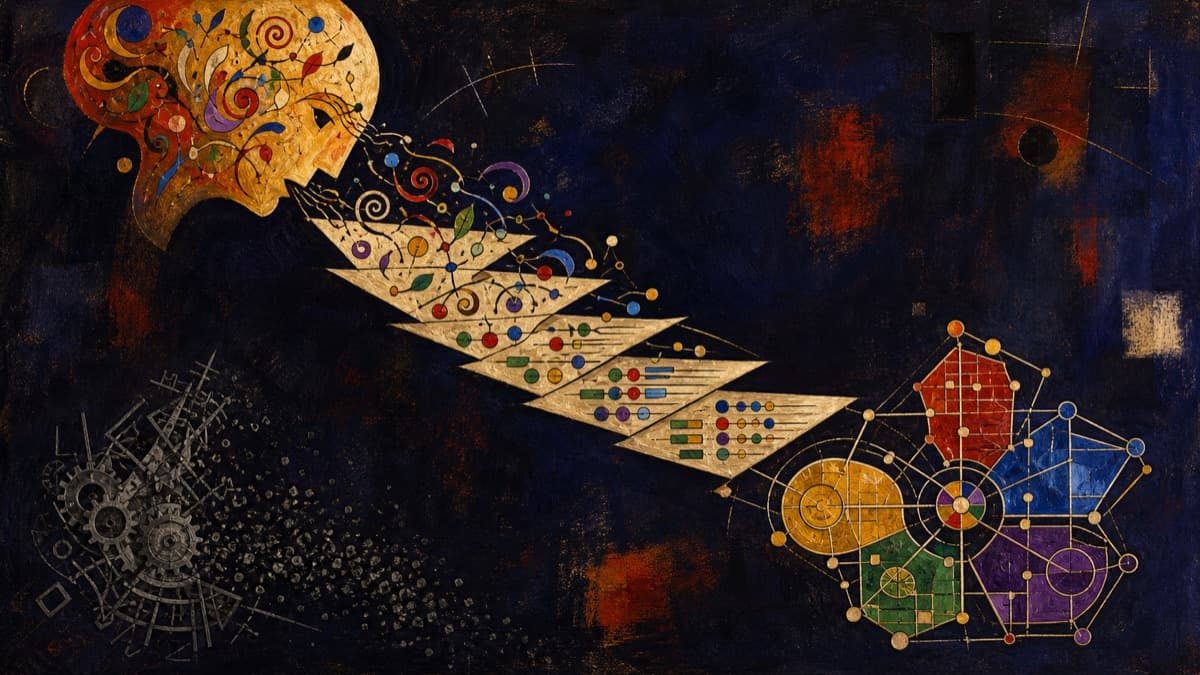
Here's a fact that gets lost in all the AI-commerce noise: the most valuable data source in your store isn't in your store. It's in your head.
You know which lotion is safe for sensitive skin because customers with sensitive skin have told you for years. You know the real burn time of your candles, which table survives a humid climate, which coffee your cold-brew customers reorder. That knowledge closed a thousand sales in person and in chat — and almost none of it exists anywhere a machine can read.
So: does it still count? More than ever. It just lives in the wrong place.
The machine can't read minds — and shouldn't guess
When AI systems evaluate your products, they read declared data. The industry's shortcut for missing data is generation: let a model fill the gaps with plausible values. We've written elsewhere in this library why that's fiction with good grammar — invented attributes are liabilities wearing your name.
But notice what the anti-generation stance implies: if the machine may not invent, the merchant's knowledge becomes the scarcest asset in the system. You're not being replaced as the expert; you're being promoted to the only legitimate source.
From your head to the source of truth — in minutes, not questionnaires
The fear this raises is practical: "am I going to fill out forms for 300 products?" No — and this is where method matters. The right sequence lets the machine do everything it can do first: read your pages, extract what you already published, resolve categories, map exactly what's missing and what's ambiguous. Only then does a human get asked — and only the questions the audit couldn't answer, pre-structured, answerable in minutes. By you, or by whoever on your team owns that area.
What you confirm enters the source of truth and flows to every place machines read. What you can't confirm is never invented — it's flagged with guidance on how to close it. Honestly empty, with a prescription attached.
That confirmation step isn't bureaucracy — it's the feature. It's the difference between a catalog that says what's probably true and one that says what the person who knows the products confirmed. Machines that cross-check sources reward the second kind.
The reframe worth keeping
The agentic era doesn't make merchant expertise obsolete; it makes unstructured expertise invisible. Your knowledge counts exactly as much as it's declared. The Program is, at its core, a disciplined way of moving what you know into what machines can verify — starting with a free look at how much of it is currently silent: one real product, in the Agentic Catalog Readiness Audit™.
(Next: the question every skeptical merchant is entitled to ask — isn't this whole thing just SEO in a new costume?)
See where your store stands
→ Run the free Agentic Catalog Readiness Audit™ — one real product from your catalog, seen exactly as the machines see it, before and after.
→ Read the complete Pillar — NSOLVIA AI Commerce Transformation Program™, the flagship engagement this series walks through.
Continue the series
← Previous: My Collections Organize the Store. Why Don't They Answer Anything? · ⌂ AI Commerce Transformation Program™ (Pillar) · → Next: Isn't This Just SEO With a New Name?
Series: NSOLVIA AI Commerce Transformation Program™ (D-PL001) · Knowledge Domain: Discoverability
NSOLVIA Intelligence — Understanding is only the beginning. Execution creates discoverability.