Who Is Actually Reading My Store?
Human visitors and AI systems read your store differently — and must be measured separately. The two channels of modern commerce, explained.
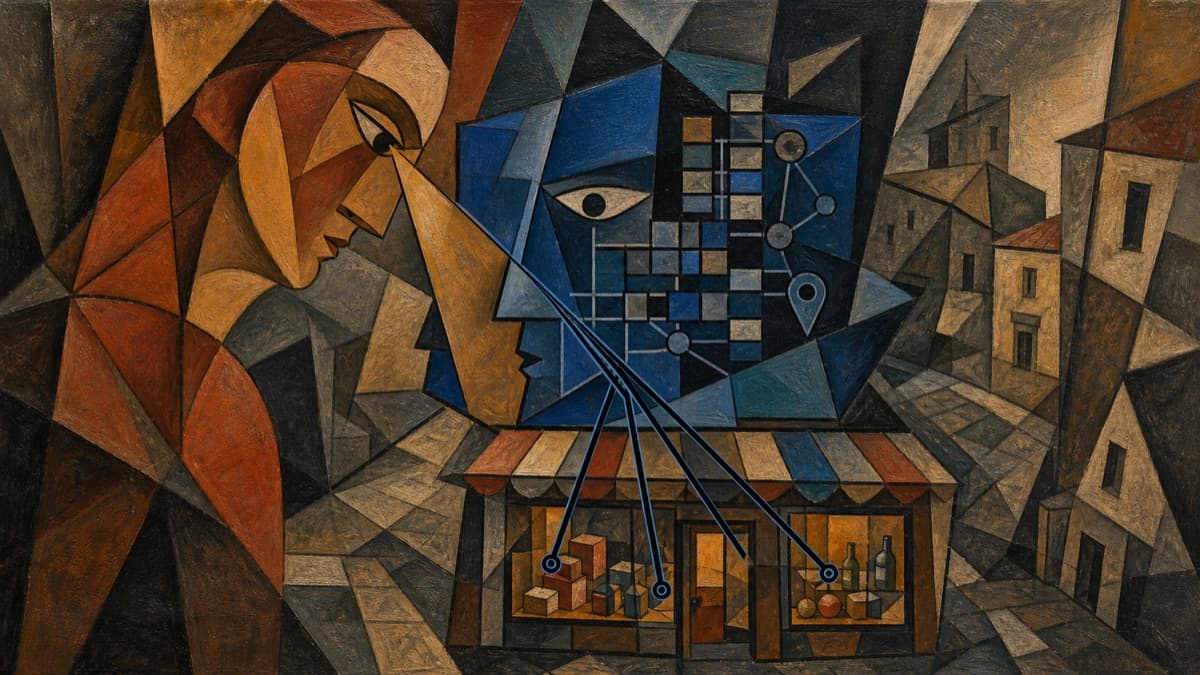
Ask a merchant who their store is for, and they'll describe a person: the customer, their taste, their needs. Correct — and now incomplete.
Every store today has two distinct readerships, and they read in opposite ways. Naming them clearly is half the strategy.
Reader one: the web channel
The humans. They arrive through browsers and classic search, and they read the way humans do: photos first, feeling fast, forgiving gaps. A gorgeous image carries a mediocre description. Brand voice builds trust. Persuasion works. Everything you've built — design, copy, photography — serves this reader, and none of it is wasted.
Reader two: the agentic channel
The machines. Search systems that synthesize answers, platforms syndicating your catalog to assistants, agents comparing products for a buyer. This reader never sees your design. It reads structured facts — categories, attributes, policies, declarations — and it does not forgive gaps, because it cannot verify what was never declared. It isn't seduced; it checks.
Here's the asymmetry that matters: the second reader increasingly decides what the first reader gets to see. When an assistant answers a shopping question, the human reads only what the machine already chose. Serve the machine poorly, and your excellence for humans plays to an emptier room.
One store, two preparations, two measurements
The mistake isn't ignoring the second reader — almost everyone does that. The mistake is assuming that serving one automatically serves the other. They need different things: the web channel needs your voice; the agentic channel needs your structure. The same product must exist as both a story and a set of verifiable facts.
Which is why they're also measured separately. Organic visibility and agentic eligibility are different phenomena; blending them into one number hides exactly the gap you need to see. A store watching only web metrics can lose the agentic channel without a single alarm going off — the previous article in this series showed how quietly that happens.
The Program is built on this two-channel discipline end to end: preparing both, measuring both, reporting both — separately, before and after.
The question to hold onto
Not "is my store good?" — it may be excellent for the reader you've always served. The question is: "good for which reader?" The free Agentic Catalog Readiness Audit™ answers it for the reader you've never met: one real product from your catalog, seen exactly as the machines see it.
Two readers. One truth, expressed twice. That's the whole architecture.
(Next: the first front of that architecture — your brand, and whether it exists anywhere machines can check.)
See where your store stands
→ Run the free Agentic Catalog Readiness Audit™ — one real product from your catalog, seen exactly as the machines see it, before and after.
→ Read the complete Pillar — NSOLVIA AI Commerce Transformation Program™, the flagship engagement this series walks through.
Continue the series
← Previous: My Traffic Looks Normal. What Am I Not Seeing? · ⌂ AI Commerce Transformation Program™ (Pillar) · → Next: Does My Brand Exist Outside My Logo?
Series: NSOLVIA AI Commerce Transformation Program™ (D-PL001) · Knowledge Domain: Discoverability
NSOLVIA Intelligence — Understanding is only the beginning. Execution creates discoverability.